The loop
Four phases.No dead ends.
Strategy work usually stops at the memo. Stride's four phases close on themselves, so what you learn in the last one changes the first.
- 01
Understand
What the documents say
- 02
Decide
Three options, scored
- 03
Execute
Owners, dates, KPIs
- 04
Progress
Plan against actual
Progress feeds back into Understand. That is what makes it a loop rather than a list.
Built to keep moving.
Each phase informs the next. What you learn in progress becomes the context for your next decision.
01 Understand
The answer is usually already written down.
Stride reads what you uploaded and returns a diagnosis of the situation, sourced line by line. Where the documents disagree with each other, it says so rather than picking the more convenient one.
- Passage-level citations on every claim
- Inference labelled apart from evidence
- Contradictions surfaced, not smoothed over
- Targeted questions for the genuine gaps

02 Decide
Three options you could actually defend.
You set the criteria first, so the scoring cannot be reverse-engineered to justify a favourite. Each option carries its own risks and what would have to be true for it to work.
- Criteria set before scores are shown
- Three genuine options, not one and two foils
- Risks and assumptions stated per option
- A memo you can hand to a board

03 Execute
The decision becomes somebody's Monday.
A 30/60/90 roadmap where every line has an owner, a date and a measure. The plan leaves the document it was written in and turns into work with names attached.
- Owners and dates on every line
- KPIs agreed up front
- Risks tracked beside the work
- Board briefs generated from the real thing
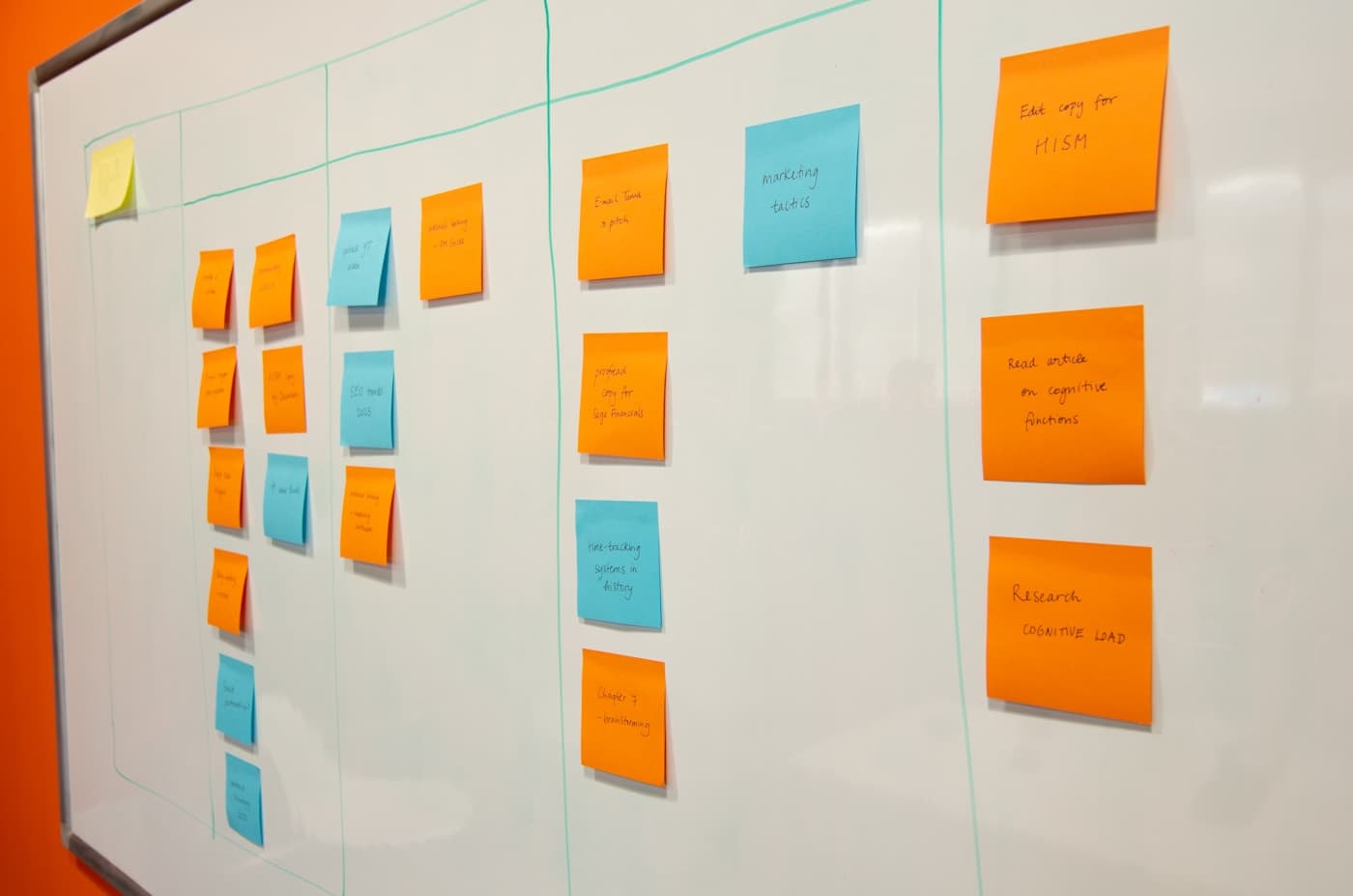
04 Progress
The gap, while there is still time.
A short recurring check-in asks what actually happened and reads the answer against the plan. When the two diverge, Stride says which assumption broke and what that implies for the rest of the roadmap.
- Weekly check-in, a couple of minutes
- Plan and actual side by side
- Broken assumptions named
- Feeds straight back into Understand

And then it starts again.
What the check-ins learn goes back into the Company Brain, so the next decision opens with more than the last one did. That is the whole point of a loop.
Start your first decision